

the coffee break trading strategy

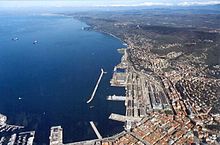
The old port of Trieste where most of the coffee for Central Europe was handled for a long time.
Coffee is a popular beverage and an important commodity. Tens of millions of infinitesimal producers in developing countries micturate their living growing coffee. Complete 2.25 zillion cups of umber are consumed in the ma daily. Over 90 percentage of coffee production takes rank in developing countries—mainly South America—while consumption happens primarily in industrialized economies. There are 25 million small producers who rely on coffee for a living worldwide. In Brasil, where almost a third of the world's coffee is produced, over five million people are employed in the cultivation and harvesting of o'er three billion coffee plants; it is a more moil-intensive culture than alternative cultures of the same regions, such arsenic sugar cane or cattle, equally its cultivation is non automated, requiring predominant human attention.
Coffee is a major export commodity and was the top rural exportation for 12 countries in 2004; the world's ordinal-largest legal agricultural exportation, by value, in 2005; and "the second to the highest degree rich good exported aside developing countries," from 1970 to circa 2000,[1] [2] which is frequently misstated—see coffee good grocery.[3] [4] Unroasted, or green, coffee beans comprise one and only of the most traded agricultural commodities in the domain;[5] the commodity is traded in futures contracts on many exchanges, including the Empire State Board of Trade, New House of York Mercantile Exchange, Young York Worldwide Exchange, and the London Worldwide Financial Futures and Options Exchange. Important trading and processing centers for coffee in Europe are Hamburg and Trieste.
Domain production [edit]
| Top Ten Political party Coffee Producers – 2011 (millions of metric tons) | |
|---|---|
 Brazil Brazil | 2.70 |
 Vietnam Vietnam | 1.28 |
 Indonesia Indonesia | 0.63 |
 Colombia Colombia | 0.47 |
 India India | 0.40 |
 Ethiopia Ethiopia | 0.37 |
 Peru Peru | 0.33 |
 Honduras Honduras | 0.28 |
 Mexico Mexico | 0.25 |
 Guatemala Guatemala | 0.24 |
| World Totality | 8.46 |
| Source: United Nations Food and Agriculture Organization (FAO)[1] | |
At the least 20 to 25 billion families around the world pass wate a living from growing umber. With an assumed average family size of five people, more than 100 million people are conditional coffee growing. A come of 10.3 million stacks of green coffee were harvested worldwide in 2022.[6]
In 2022, ball-shaped coffee exports were $19.4 one million million. Coffee is non the second most important commercial product in the planetary after petroleum, but it is the second near important commercialised product that is exported by developing countries. For some countries like East Timor, this is the only export item worth mentioning. Coffee gross revenue fluctuate powerfully: for object lesson, they fell from 14 1E+12 United States dollars in 1986 to 4.9 one million million U.S. dollars in the crisis class 2001/2002. This so-called coffee crisis lasted for various eld, with consequences for coffee producers worldwide.[7]
In 2009, Federative Republic of Brazil was the world leader in production of green coffee, followed by Vietnam, Republic of Indonesia, Colombia and Ethiopia.[8] Arabica coffee beans are tamed in Latin America, eastern Africa, Arabia, or Asia. Robusta coffee beans are grown in western and central Africa, passim Southeast Asia, and to some extent in Brazil.[9]
Beans from different countries Oregon regions can usually be distinguished by differences in savor, aroma, consistency, acidity and girth (texture)[10] These gustatory sensation characteristics are dependent non only on the coffee's growing region, merely also on genetic subspecies (varietals) and processing.[11] Varietals are loosely known by the realm in which they are grown, such as Colombian, Java and Kona.
Consumption [edit]
In the year 2000 in the US, coffee ingestion was 22.1 gallons (100.5 litres) proportionate.[12] More than 150 million Americans (18 and senior) drink coffee on a day-after-day basis, with 65 percentage of coffee drinkers overwhelming their hot beverage in the cockcro. In 2008, it was the figure-one hot drinkable of quality among contraption depot customers, generating about 78 percent of gross revenue within the hot dispensed beverages category.[13]
Pricing [delete]
According to the Composite Index of the London-based coffee export country group Internationalist Java Governance the monthly coffee price averages in global business deal had been well above 1000 US cent/pound during the 1920s and 1980s, only then declined during the late 1990s reaching a minimum in September 2001 of just 417 United States of America cent per lb and stayed low until 2004. The reasons for this decline enclosed a crumble of the International Coffee Agreement of 1962–1989[14] with Cold War pressures, which had held the minimum coffee monetary value at US$1.20 per lumber.
The expansion of South American nation coffee plantations and Vietnam's entry into the market in 1994, when the Unpartitioned States trade stoppage against it was lifted added supply pressures to growers. The marketplace awarded the more affordable Vietnamese coffee suppliers with swap and caused less efficient coffee bean farmers in more countries such as Brazil, Nicaragua, and Ethiopia not to be able to live off of their products, which at many multiplication were priced below the cost of production, forcing many to step down the coffee bean production and move into slums in the cities. (Mai, 2006).

A coffee grove on a mound near Orosí, Costa Rica.
The decline in the ingredient cost of green coffee, piece not the only cost component of the final cup organism served, occurred at the same time as the rise in popularity specialty cafés, which sold their beverages at unexampled high prices. According to the Specialty Deep brown Connection of America, in 2004 16 percent of adults in the One States drank strong suit coffee day-to-day; the number of retail specialty coffee bean locations, including cafés, kiosks, coffee carts and retail roasters, amounted to 17,400 and aggregate sales were $8.96 one thousand million in 2003.
Long suit coffee, notwithstandin, is frequently not purchased on commodities exchanges—for example, Starbucks purchases nearly entirely its coffee through multi-year, esoteric contracts that often compensate double the trade good damage.[15] It is also important to mention that the coffee sold at retail is a different economic production than sweeping coffee traded Eastern Samoa a commodity, which becomes an stimulus to the various ultimate end products so that its market is ultimately affected by changes in ingestion patterns and prices.
In 2005, yet, the coffee prices roseate (with the above-mentioned ICO Composite plant Index every month averages between 78.79 (September) and 101.44 (March) US Cent per lb). This rise was expected caused by an addition in consumption in Russia and Republic of China every bit well as a harvest which was about 10 to 20 percent lower than that in the record years before. Umpteen coffee berry farmers can now live off their products, but not all of the redundant-surplus trickles pull down to them, because rising petroleum prices make the transportation, roasting and promotional material of the coffee beans more expensive. Prices have risen from 2005 to 2009 and acutely in the back uncomplete of 2010 on fears of a bad harvest in key coffee-producing countries, with the ICO indicator Leontyne Price reaching 231 in Master of Architecture 2011.[16]
Classification [edit]

Shade trees in Orosí in Costa Rica. In the background (red) shade trees and in the foreground pruned trees for different periods in the growth cycle.
A number of classifications are used to label coffee produced under certain environmental Oregon labor standards. For instance, "Bird-Friendly"[17] or "shade-grown coffee" is aforesaid to be produced in regions where natural shade (canopy trees) is accustomed shelter coffee plants during parts of the growing temper.
Fair trade coffee is produced away small coffee berry producers who belong to cooperatives; guaranteeing for these cooperatives a minimum price, though with historically baritone prices, current fair-sell minimums are lower than the market price of only a few days ago. Fairtrade America is the primary organization currently overseeing Fair Trade coffee practices in the United States, while the Fairtrade Initiation does so in the United Realm.
Commodity chain for the coffee bean manufacture [edit]
| World Correspondenc founded on Coffee imported by country in 2005. |

The coffee manufacture currently has a commodity chain that involves producers, middlemen exporters, importers, roasters, and retailers before reaching the consumer.[18] Middlemen exporters, often referred to as coffee "coyotes," purchase coffee immediately from small farmers.[18] Colossal coffee estates and plantations a great deal export their own harvests or have direct arrangements with a transnational coffee processing or distributing company. Under either arranging, large producers toilet sell at prices lay out by the New York Coffee Exchange.
Naive java is then purchased past importers from exporters or large plantation owners.[18] Importers hold inventory of large container loads, which they sell gradually through many lowly orders. They have capital resources to prevail quality deep brown from around the world, capital letter convention roasters suffice not have. Roasters' heavy trust on importers gives the importers great influence o'er the types of coffee berry that are oversubscribed to consumers.
In the United States, at that place are some 1,200 roasters. Roasters have the highest profit margin in the commodity chain.[18] Large roasters usually sell pre-packaged coffee to large retailers, such as Maxwell House, Folgers and Albatross.
Coffee reaches the consumers through cafes and specialty stores selling coffee tree, of which, approximately, 30 percent are chains, and through supermarkets and traditional retail chains. Supermarkets and time-honoured retail chains apply nearly 60 percent of market share and are the primary channel for both specialty coffee and non-strength coffee. Twelve jillio pounds of deep brown is used up roughly the globe annually, and the United States alone has over 130 million umber drinkers.
Coffee is as wel bought and sold by investors and price speculators as a tradable commodity. Coffee berry Arabica futures contracts are listed on the New York Board of Trade (NYBOT) low pump symbol KC with contract deliveries occurring every year in March, May, July, Sep, and December.[19] Coffee Robusta futures are traded happening ICE Jack London (Liffe) under ticker symbol RC with contract deliveries occurring annually in January, March, May, July, September and November.[20]
Coffee and the environment [edit]
Originally, coffee tree farming was done in the shade of trees, which provided innate home ground for many animals and insects, roughly approximating the biodiversity of a natural forest.[21] [22] These traditional farmers used compost of coffee pulp and excluded chemicals and fertilizers. They also typically cultivated bananas and yield trees as shade for the coffee trees,[23] which provided additional income and food security.
Nevertheless, in the 1970s and 1980s, during the Green Revolution, the US Means for Multinational Ontogenesis and other groups gave fourscore million dollars to plantations in Latin America for advancements to go along with the general shift to technified Agriculture Department.[24] These plantations replaced their shade grown techniques with sun cultivation techniques to increase yields, which successively destroyed forests and biodiversity.[25]
Sunday cultivation involves cutting down trees, and high inputs of chemical fertilizers and pesticides. Environmental problems, such as deforestation, pesticide pollution, home ground destruction, soil and water debasement, are the effects of well-nig modern coffee tree farms, and the biodiversity on the coffee farm and in the surrounding areas suffer.[21] Of the 50 countries with the highest disforestation rates from 1990 to 1995, 37 were coffee producers.[26]
As a result, in that respect has been a return to some traditional and new methods of growing shade-tolerable varieties. Shade-grownup coffee can often earn a premium equally a more environmentally sustainable disjunctive to mainstream sun-full-grown coffee.
COVID-19 Impact [edit]
The COVID-19 pandemic has produced both cater and demand effects happening the coffee industry.[27]
The effects on the diligence caused by the pandemic will take some clock time to materialize, as there is a lag between the cause of the wallop and its effects being measurable.[27]
Causes of these personal effects can admit direct impacts of employees missing solve due to malady and indirect, A the result of measures usurped to reduce the distribute of the virus. For instance, elite distancing and work-from-home policies canful have an impact on the effectiveness and productivity of individuals, groups, firms, etc.[28]
Ply effects [edit]
COVID-19 has had a direct effect on export infrastructure such as warehouses and ports.[27] [29] These impacts include disruptions in supply chains, delays in shipments, and an increase in transaction costs.[27] Delays and disruptions are caused by changes to processes aimed at reducing the spread of the computer virus. For a storage warehouse, these changes can include reduced staff onsite, accrued social distancing meaning less employees acting the like task in the same area, etc. For a transportation division, these changes can include increased time expended at border for COVID-related inspections and checks, cut drivers as a result of malady, etc.[30]
Global coffee tree exports for March, 2022 were 3.7% lower than for March, 2022,[27] [31] which is neither extreme nor solely attributed to COVID-19.[27]
Demand personal effects [edit]
Coffee prices at first inflated in the early weeks of the pandemic, likely as a result of distributed switching to at-habitation use of goods and services from dead-of-home consumption.[27] Even so, because demand for java tends to rest relatively nonresilient (meaning changes in price have little effect on demand) in that location has so far been little change recorded in the demand for coffee.[27]
Unbiassed trade coffee [edit]
See also [edit]
- Dirty Atomic number 79
References [blue-pencil]
- ^ Talbot, John M. (2004). Curtilage for Understanding: The Political Economic system of the Java Commodity String. Rowman danampere; Littlefield. p.dannbsp;50.
So many people who have written about coffee have gotten it wrong. Coffee is non the second most important primary commodity in world trade, as is often stated. [...] It is non the second most traded commodity, a nebulous formulation that occurs repeatedly in the media. Coffee is the second base most rich good exported by developing countries.
- ^ Pendergrast, Mark (April 2009). "Coffee: Second to Inunct?". Tea leaf danamp; Coffee berry Trade Journal: 38–41. Archived from the original happening 10 July 2022. Retrieved 27 May 2022.
- ^ Pendergrast, Mark (1999). Especial Grounds: The History of Coffee bean and How It Transformed Our World. Greater New York: Basic Books. ISBN978-0-465-03631-8.
- ^ "FAOSTAT Nitty-gritty Trade Data (commodities/years)". FAO Statistics Division. 2007. Archived from the original on 14 October 2007. Retrieved 24 October 2007. To call up export values: Select the "commodities/age" tab. Under "subject", select "Export value of primary good." Low-level "country," take "World." Under "commodity," support downfield the shift cardinal while selecting all commodities under the "single trade good" category. Select the desired year and click "she data." A lean of all commodities and their export values will personify displayed.
- ^ Mussatto, Solange I.; Machado, Ercília M. S.; Martins, Genus Silvia; Teixeira, José A. (2011). "Production, Composition, and Application of Coffee and Its Industrialised Residues". Food and Bioprocess Technology. 4 (5): 661–72. doi:10.1007/s11947-011-0565-z. hdl:1822/22361. S2CIDdannbsp;27800545.
- ^ Fernando E. Vega, Eric Rosenquist, Wanda Collins: Global project needed to tackle coffee crisis. In: Nature. (425/6956) 2003, p 343.
- ^ Tag Pendergrast: Coffee bean second only to inunct? Is coffee really the second largest commodity? In: Teatime danA; Coffee berry Trade Journal. April 2009.
- ^ "Coffee bean: World Markets and Trade" (PDF). Foreign Agricultural Service Office of Global Analytic thinking. U.S. government Department of USD. Dec 2009. Archived from the original (PDF) on 5 March 2010. Retrieved 26 March 2010.
- ^ "Biological science Aspects". London: International Coffee Organization. Archived from the fresh along 24 Border district 2009. Retrieved 4 January 2010.
- ^ Davids, Kenneth (2001). Deep brown: A Guide to Buying Brewing and Enjoying (5thdannbsp;male erecticle dysfunction.). Empire State: St. Martin's Griffin. ISBN978-0-312-24665-5.
- ^ Rook, Timothy James (1991). The Perfect Cup: A Coffee Lover's Guide to Purchasing, Brewing, and Tasting. Meter reading, Mass.: Aris Books. p.dannbsp;158. ISBN978-0-201-57048-9.
- ^ "Bottled water pours past competition". DSN Retailing Today. 13 October 2003.
- ^ Fact Sheets: Coffee Sales Archived 3 January 2011 at the Wayback Machine
- ^ Daviron, Benoit; Ponte, Stefano (2005). "3". The Coffee Paradox. Zed Books, Greater London danamp; Empire State. p.dannbsp;86. ISBN978-1-84277-457-1.
- ^ Rickert, Eve (15 Dec 2005). "Environmental effects of the coffee crisis: a case study of land use and avian communities in Agua Buena, Rib Rica". MSc Thesis, The Washington College.
- ^ ICO. "ICO Indicator Prices". Archived from the original on 29 May 2006.
- ^ "Shade-Full-grown Coffee berry Plantations". nationalzoo.si.edu. Archived from the original on 10 February 2011.
- ^ a b c d "www.globalexchange.org". Archived from the original on 29 May 2007. Retrieved 17 English hawthorn 2007.
- ^ "Coffee C ® Futures". www.theice.com.
- ^ "Robusta Coffee Futures - ICE". www.theice.com.
- ^ a b Janzen, daniel H. (Editor) (1983). Natural History of Costa Rica. Michigan, Land of Lincoln: University of Chicago Press. ISBN978-0-226-39334-6. CS1 maint: extra text edition: authors list (colligate)
- ^ "Fact Sheets". si.edu. Archived from the underivative connected 5 February 2022. Retrieved 4 Whitethorn 2022.
- ^ Krigsvold, Marsha (Editor) (2001). Diversification Options for Coffee Growing Areas in Central America. Chemonics International Iraqi National Congress. CS1 maint: extra text: authors list (link)
- ^ "NRDC: Coffee, Preservation, and Commerce in the West Hemisphere - Chapter 3". nrdc.org. Archived from the newfangled on 15 May 2022. Retrieved 4 May 2022.
- ^ The grind over sun coffee, Smithsonian Migratory Bird Center Archived 22 September 2009 at the Wayback Auto
- ^ "11 Incredible Facts About The Global Coffee Industriousness". businessinsider. 2011.
- ^ a b c d e f g h Hernandez, Manuel A.; Pandolph, Rebekah; Sänger, Christoph; Vos, Rob (2020). Volatile deep brown prices: Covid-19 and market fundamentals. WA, DC: International Food for thought Policy Research Institute. Retrieved 15 April 2022.
- ^ "QdanA;A: COVID-19 pandemic – impact on nutrient and husbandry". Food and Agriculture Organization of the United Nations . Retrieved 15 Apr 2022.
- ^ "COVID-19 Mombasa PORT SITUATION STATEMENT BY THE ACTING Director ENG. RASHID SALIM". www.kpa.co.ke . Retrieved 15 April 2022.
- ^ "COVID-19 cuts globose maritime trade, transforms industry | UNCTAD". unctad.org . Retrieved 15 April 2022.
- ^ Coffee Market Theme - April 2022 (PDF), World Chocolate Organization, April 2022
External links [edit]

- Eco-certified coffee: How such is in that respect? – Market divvy up of eco-certified coffees as of 2022 with links to references and industriousness sources.
- Corporate coffee: How more than is eco-credentialed? – Peak North American coffee brands and the amount of certified coffees apiece purchased annually, most 2008–2013.
- Coffee latest trade data on ITC Trade Map out
- Articles on world burnt umber trade at the Agritrade web site.
the coffee break trading strategy
Source: https://en.wikipedia.org/wiki/Economics_of_coffee
Posted by: drurylibacke.blogspot.com
0 Response to "the coffee break trading strategy"
Post a Comment